
Trail Running in Park City, Utah
It All Begins Here
By Finn Melanson · Massif Running
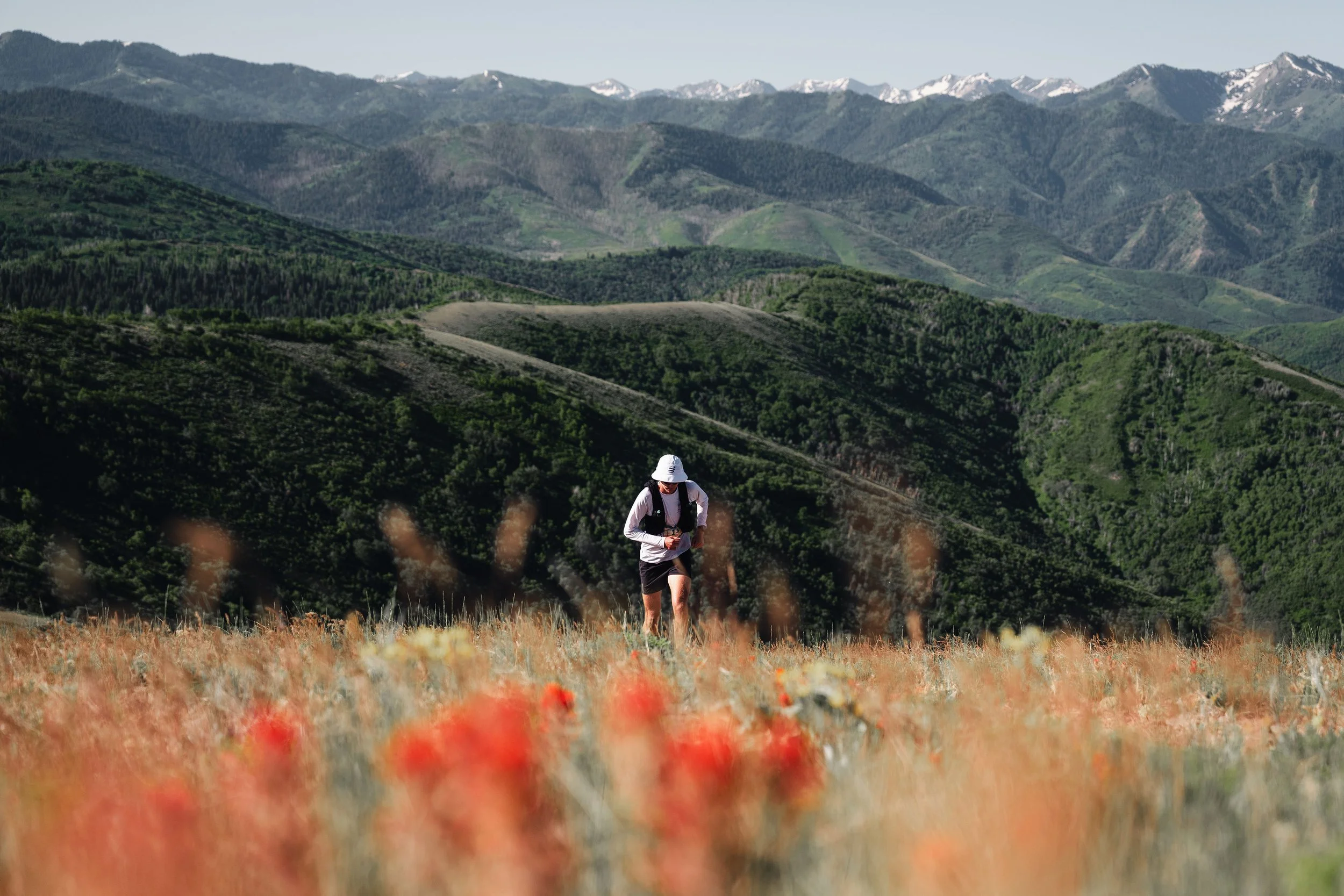
Park City has over 400 miles of trail threading through the Wasatch Mountains, connecting ski resort terrain, protected open space, and historic mining corridors into one of the most complete trail running systems in the American West. You can run here every month of the year. The terrain ranges from low-elevation dirt roads and rolling singletrack that stay runnable through winter, to high alpine ridgelines approaching 10,000 feet that open up in late spring and reward the climb with some of the best views in Utah. Whatever distance, elevation, or difficulty you are looking for, you can find it here.
This guide is written for two people: someone visiting Park City who wants to know where to run and when, and someone local to the area who is new to these trails and wants an honest orientation before heading out. I cover the best routes organized by season — the year-round options that hold up through snow and mud, and the high country trails worth saving for when they open. Each description covers what the trail is actually like, not just its distance and elevation, and who it is best suited for, because the right trail on the wrong day is just a bad run.
One thing to say before the trail descriptions: the altitude is real. Park City proper sits around 6,900 feet, and the surrounding area ranges from about 6,500 feet at the lower trailheads up to nearly 10,000 feet on the high ridgelines. If you are coming from lower elevation, your first day will feel manageable, your second day will feel slower than expected, and by the third day your body will have formed a clear opinion about the whole situation. Drink more water than you think you need. Start at a more conservative pace than your fitness suggests. These are not warnings for beginners only — they apply to everyone arriving from sea level, regardless of how fit they are.
Some Trails Worth Exploring
This is not an exhaustive accounting of every trail in Park City. For a master list, I would point you to Basin Recreation and the Mountain Trails Foundation, two organizations that do excellent work maintaining these trails and putting together detailed maps and resources for the area. What I want to give you here is a shortlist — the options a local would hand a runner who is new to the scene and wants a honest taste of what makes this place worth coming back to, organized by season so you know what is actually available when you arrive.
The Year-Round Workhorses
Round Valley
Quinn's Junction Trailhead · 6,500 ft elevation · 30+ miles of trail · All levels
Round Valley is the backstop of the Park City trail running scene — and a genuinely good one at that. Thirty miles of soft dirt doubletrack and flowing singletrack spread across 700 acres northeast of Old Town, and the trail network is active twelve months a year. That is not hyperbole. When the high country is buried under two feet of snow from November through April, Round Valley stays runnable because fat tire bikers, nordic skiers, snowshoers, and hikers continuously pack down whatever falls. You can run here in January in light layers and feel the ground underfoot. For locals, this is often where winter mileage gets built.
Beyond the reliability, it is a genuinely enjoyable place to spend a morning. The terrain opens up enough that you get panoramic views of the surrounding area. The trails run alongside sports fields, public restrooms, and playgrounds, which makes it a practical option if you have kids in tow or want to make a full outing of it. It tends to be social — on any given day you are sharing the trail with mountain bikers, dog walkers, and people on skis, all doing their own thing in the same space. When May and June arrive and the high country opens, most people migrate upward. Come November, Round Valley earns its place on the calendar again. The 6.2-mile loop connecting the valley to the Rambler Trail is the standard entry point. Dogs are everywhere and almost always off-leash, which is either charming or annoying depending on your disposition.
Glenwild and Flying Dog
Glenwild Trailhead, Kimball Junction · ~6,500 ft · 3 to 15+ miles · Beginner to intermediate
Glenwild sits north of Park City in Kimball Junction, lower and drier than anything above town, and its south-facing terrain means snow does not stay long when it comes. Like Round Valley, this is a winter and early spring refuge when the higher trails are buried. The Blackhawk Loop at 3.1 miles with 300 feet of climbing is the lunch-break option that still leaves you with plenty of day left. When you are ready for more, extend into the Flying Dog trail network, which adds significant mileage through gambel oak and scrub brush at the lower elevations before climbing into open meadows and aspen forest. Those aspens come fully alive in mid to late May — one of the better reasons to be out here in the spring before the high country has opened. The trail shares space with mountain bikers on most sections, so descend with your head up. For visitors arriving before Memorial Day or after Labor Day, or for anyone wintering in the area and trying to keep their mileage honest, Glenwild and Flying Dog are where it's at.
Jeremy Ranch Road
Jeremy Ranch area, off I-80 · ~6,400 ft · 3 to 15+ miles · All levels
This one does not always show up on the trail running listicles for the area, and maybe that is part of why locals love it. Jeremy Ranch Road is a dirt road run, which puts it in a different category than everything else on this list, but it earns its place. The surface is forgiving and in winter it becomes one of the most reliable running corridors in the Park City area when the trails are frozen or icy. Road marathoners training for a goal race use it as a long run venue that provides a softer surface without the technical demands of singletrack. It is also just a genuinely pleasant way to be outside with good views and no traffic to manage.
One thing worth knowing: Jeremy Ranch Road is tougher than it looks on paper. You glance at the grade and expect to clip off comfortable miles, but the elevation is working on you the whole time and the terrain rolls more than it appears, with constant gentle variations that have you shifting effort up and down without ever settling into a groove. By the end of a long run out here, those accumulated gear changes add up. It is the kind of run that builds character quietly, without announcing itself. If you are building volume in December and need somewhere honest to put in twelve miles, this is it.
Historic Union Pacific Rail Trail
Bonanza Drive, Park City · ~6,500 ft · 3 to 26 miles · All levels
The Rail Trail is the flattest running option in the Park City area by a wide margin, and that is precisely its value. Built on a decommissioned Union Pacific railroad corridor, it runs 26 miles north from Bonanza Drive in Park City all the way to Echo Reservoir. Most people run a portion out and back rather than the full distance. The surface is mainly gravel, the grade is gentle, and it is accessible year-round. For visitors who want mileage without elevation, runners recovering from a hard effort the day before, or anyone who just wants to be outside without working too hard, this is the right call. It also happens to be one of the more historically interesting routes in the area, passing through terrain that carried coal and ore during Park City's silver mining era.
The High Country, When It Opens
Jenni's Trail
Park City Mountain Resort base · 6,900 ft to 8,200 ft · 3 to 6 miles · Intermediate
Jenni's Trail starts at the base of Park City Mountain Resort and climbs through aspen stands and scrub brush to just above 8,200 feet, winding underneath ski lifts on the way up. It is not the longest or most remote route on this list, but it is one of the more useful ones for a specific reason: it is an honest introduction to what running at altitude in the Wasatch actually feels like. The climb is sustained enough that your lungs will notice, and the descent back to the base is fast and enjoyable. For visitors arriving in Park City who want to test their legs before committing to a bigger day, or for locals who want a reliable after-work option that does not require a long drive to a trailhead, Jenni's Trail earns its place. Note that the trail is shared with uphill mountain bikers, so stay aware on the way up.
Mid Mountain Trail
Access from Deer Valley Silver Lake Lodge or Canyons Village · ~8,000 ft elevation · 22 miles point-to-point · Intermediate to advanced
Mid Mountain is the trail that makes people fall in love with Park City. It bisects Deer Valley and Park City Mountain at roughly 8,000 feet, threading through fir forest and aspen groves with views that catch you off guard even when you are expecting them. In the Park City trail running community, completing the full point-to-point is something of a rite of passage. I try to do it once a year, usually right after snow melt in mid to late May, when the trail is fresh and the crowds have not yet arrived.
The full route from Deer Valley to Canyons Village is 22 miles, and logistics are more manageable than you might expect. Park City has a genuinely good bus system, which means you can drop a car at Canyons Village, ride transit over to the Deer Valley start, and run the whole thing without asking anyone for a favor. A good shorter option is an out-and-back from Deer Valley's Silver Lake Lodge, running as far as the legs and the day allow.
On a map, this route does not look particularly challenging. The surface underfoot is about as close to carpet as trail running gets, and the elevation gain is not overwhelming. What the map does not tell you is what it feels like to run at 8,000 feet for a prolonged stretch. You cannot forget the altitude for long out here. It catches up with you in the second half in ways that surprise even experienced runners. One additional caveat: Mid Mountain is one of the most popular multi-use trails in the Wasatch. Mountain bikers, hikers, and trail runners all share it, and on summer weekends it can feel like a highway. If you came to the mountains for solitude, pick a Tuesday morning or consider the options listed elsewhere in this guide.
Armstrong to Pinecone Ridge to the Wasatch Crest
Silver Star Trailhead · 6,900 ft to 9,000+ ft · 6 to 20+ miles depending on objective · Intermediate to advanced
Armstrong starts as a beautifully graded four-mile climb from the base of Park City Mountain Resort through aspen stands and scrub oak, gaining 1,300 feet with a rhythm that makes the ascent feel earned rather than punishing. It is also an uphill-only mountain bike trail, so you will not be dodging anyone coming down at speed. From the top you have options, and that is where it gets interesting. For a short day, loop back via HAM and Spiro trails to the Silver Star parking lot, or peel off onto Dawn's Trail for a quick three-mile return. For a long day, continue onto Pinecone Ridge. This trail takes you all the way up to the Wasatch Crest, the long ridgeline that forms the spine of the range and offers views in both directions that are hard to explain to someone who has not stood there. Plan for significant elevation gain, bring layers for the exposure up top, and allow more time than you think you will need. The High West Distillery at the base of Main Street is twelve minutes from the trailhead and a burger after a day on Armstrong and Pinecone Ridge is one of the great Park City rituals, or at least it is for me.
Olympic Park Trails to the Crest and Murdock Peak
Utah Olympic Park, Kimball Junction · 6,700 ft to 9,000+ ft · 5 to 20+ miles · Intermediate to advanced
Most people know Utah Olympic Park as the ski jumping and bobsled facility built for the 2002 Games. Runners also know it as a launching point for excellent trail routes. Rob's Trail and the Olympic Trail start here and, depending on how much you want to suffer, can take you all the way up to the Wasatch Crest and destinations like Murdock Peak, which rewards the climb with some of the more dramatic ridgeline terrain in the Park City system. The lower sections near the park are beginner-friendly, which makes this a good warm-up area. But the route to the Crest is a serious climb: sustained effort through terrain that becomes increasingly alpine as you gain elevation, and beautiful throughout. The payoff is proportional. For runners who want to explore beyond the standard Park City circuits and earn something that feels remote even though you started from a parking lot, this corridor is underutilized and worth your attention.
The other thing worth knowing: Olympic Park is a destination in its own right after the run. There is food and drink on site, a history museum covering the 2002 Games, and the ski jump infrastructure up close, which is more impressive standing at the base of it than it looks on television. If you are bringing family members who are not running, this is one of the better trailheads in the area for keeping everyone occupied.
Summit Park: Road to Wos, Short Stack, Hoof It, Over Easy, No Worries
Summit Park neighborhood · ~7,000 ft · Various combinations · Intermediate
Summit Park is a residential neighborhood tucked into the mountains between Park City and Salt Lake, and its trail network is one of the quiet finds of the region. Road to Wos, Short Stack, Hoof It, Over Easy, and No Worries are all part of a connected system that delivers real trail running: genuine climbing, technical sections, and satisfying descents, without the crowds you find on the more publicized routes. Locals who want to get away from the weekend traffic on Mid Mountain or Armstrong will often point you here instead. The names tell you something about the culture: this is trail running that does not take itself too seriously, in terrain that earns your respect anyway. Worth exploring on a weekday or whenever you want the terrain more or less to yourself. And if you want to add a summit to the day, Summit Park Peak overlooks this whole network as well as the rest of the Central Wasatch, and it is one of the least visited summits in the area, but completely worth it for the expansive views and the solitude. The fact that it sits nestled in a residential neighborhood makes it all the more surprising. You do not have to travel far out here to feel genuinely out there.
From Main Street: Sweeney Switchbacks and John's Trail to Treasure Hill
Old Town Park City · Starts at 6,900 ft · 3 to 8 miles · Intermediate
One of the things that sets Park City apart from most mountain towns is that you can walk out of a coffee shop on Main Street and be on singletrack in under five minutes. Sweeney Switchbacks start at the east end of Old Town and climb with intention through scrub oak and aspen, connecting to John's Trail, which traverses the hillside above town toward Treasure Hill. The views back over the historic district and the ski runs of Park City Mountain are exactly what you would want. This is the run for the morning you are staying on Main Street and do not want to drive anywhere, or for the afternoon you have ninety minutes and need to remind yourself why you live somewhere like this. It is also a genuinely good trail, not a consolation prize for not having a car. The climbing is real and the descent back into town will wake up your legs. My post-run tradition after this one is to head straight to Harvest. Hands down my favorite coffee and breakfast spot in the area, and conveniently close enough that you will still be glowing from the run when the food arrives.
When to Come
The honest answer is late May through October. Snow can linger on the high trails into June, and the lower-elevation systems like Round Valley and Glenwild carry mud through early spring. Late May is when it comes together: the high country starts to open, the wildflowers arrive in force at altitude, and the summer crowds have not yet descended. September and October are the other sweet spot. Aspen color peaks in late September and runs into early October, and the light in the Wasatch at that time of year is genuinely something. The temperature drops but the trails are in their best condition of the year, dry and firm from a summer of use.
Summer is good too. That said, check the forecast before heading out, because afternoon thunderstorms are fairly common in July and August, building fast and arriving faster. If storms are in the picture, start early and plan to be off the exposed ridgelines by midday. Lightning at 8,000 feet is not something you want to discover unprepared.
What to Bring
The Wasatch in late spring is not the desert Southwest. Morning temperatures in May and June can drop into the thirties at elevation even when the valley is warm. Bring a wind layer regardless of what the forecast says. Carry more water than you think you need, especially if you are not acclimatized. The trails are generally well-marked but a downloaded AllTrails map or the Mountain Trails Foundation map is worth having on your phone before you head into the Mid Mountain system, where trails branch and junctions multiply.
Run in trail shoes with real grip. The Wasatch soil goes from hardpack to loose shale to rooted forest floor within the same mile. Road shoes will get you through Round Valley but they will make Armstrong an adventure you did not ask for.
After the Run
High West Distillery on Main Street is the obvious answer and the correct one. Their whiskey is good and their food is better than a distillery restaurant has any right to be. No Name Saloon, a few doors down, is louder and cheaper and fine for a post-run beer if the line at High West is long. If you want coffee and something resembling a recovery meal, Harvest is my go-to, the best breakfast spot in the area and exactly the kind of place you want to walk into still wearing your trail shoes. For dinner after a longer day on trail, Handle does modern American that is worth the reservation.
What Makes This Place Special
Compared to most mountain towns, Park City trails are actually pretty approachable. Because so much of the network was built with mountain biking in mind, the trails are graded for flow rather than punishment. You are not going to find the steep, relentless, quad-destroying climbs that define running on the Wasatch Front. What you find instead are well-designed routes with manageable grades, excellent surface conditions, and enough variety to keep any runner engaged regardless of fitness level. It is terrain that rewards effort without requiring you to suffer for the privilege of being out there.
What makes Park City genuinely special, though, is the community that has built and maintained all of it. Organizations like Basin Recreation and the Mountain Trails Foundation have turned an already remarkable natural setting into one of the most complete trail systems in the West, and they keep building. The outdoor community here cares deeply about these trails, and that care shows in the quality of what exists. Wherever you start and whatever distance you cover, you are the beneficiary of decades of that work.
If you want to experience this terrain with a bib number and a finish line and a few hundred other people who understand exactly what you are doing and why, that is what the Twisted Fork Trail Festival was built for. The race covers the Glenwild and Flying Dog networks, the Basin Recreation trails near Jeremy Ranch Road, and the Great Western Trail, covering some of the same ground as this guide.